What Oil Does My Car Take? The Complete Guide to Choosing the Right Engine Oil
Published: 11 Jun.2026
If you’ve ever stood in the motor oil aisle wondering, “What oil does my car take?”, you’re not alone. With dozens of oil grades, brands, and types available, choosing the wrong one can be confusing—and potentially harmful to your engine.
The good news is that finding the correct oil for your vehicle is easier than most people think. Whether you’re preparing for an oil change, checking your owner’s manual, or searching what oil does my car take by VIN, this guide will help you choose the right engine oil with confidence.
We’ll cover oil grades, oil types, VIN lookups, oil capacities, common mistakes, and practical buying tips to help you select the best engine oil for your vehicle while avoiding costly mistakes.
Why Choosing the Right Oil Matters
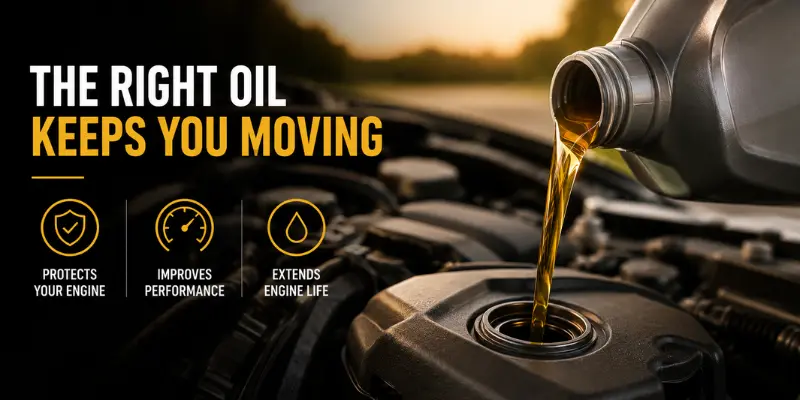
Engine oil does much more than simply lubricate moving parts.
The correct oil helps:
- Reduce engine wear
- Prevent overheating
- Improve fuel economy
- Keep internal components clean
- Protect against corrosion
- Extend engine life
- Improve cold-start performance
Using the wrong oil can lead to poor performance, reduced fuel efficiency, increased engine wear, and expensive repairs over time.
What Does Engine Oil Do?
Modern engine oil performs several critical functions:
Lubrication
Oil creates a protective film between moving engine parts, reducing metal-to-metal contact.
Cooling
Oil absorbs heat generated by engine components and helps transfer it away from critical areas.
Cleaning
Detergents in motor oil help remove sludge, deposits, and contaminants.
Corrosion Protection
Engine oil protects metal surfaces from rust and oxidation.
Sealing
Oil helps create a better seal between piston rings and cylinder walls, improving engine efficiency.
How Do I Find Out What Oil My Car Takes?
There are several reliable ways to determine the correct oil for your vehicle.
1. Check the Oil Filler Cap
The easiest method is to open the hood and look at the oil filler cap.
Many manufacturers print the recommended oil grade directly on the cap.
Examples include:
- 0W-20
- 5W-20
- 5W-30
- 10W-30
If the grade is listed, use it as your starting point.
2. Read Your Owner’s Manual
Your owner’s manual provides the most accurate information.
It includes:
- Recommended oil viscosity
- Oil capacity
- Manufacturer approvals
- Oil change intervals
- Climate-specific recommendations
Always follow the manual if there’s any conflict between sources.
3. Use Your Vehicle Identification Number (VIN)
Many drivers search what oil does my car take by VIN because it’s one of the most accurate methods.
Your VIN contains information about:
- Engine size
- Model year
- Trim level
- Factory specifications
Many dealership websites and automotive parts retailers offer a what oil does my car take by VIN free lookup tool.
Simply enter your VIN to receive:
- Recommended oil viscosity
- Oil capacity
- Filter information
- Service specifications
4. Use an Online Oil Finder Tool
Several manufacturers provide oil lookup tools.
These tools function like a what oil does my car take calculator, helping you identify the proper oil based on:
- Year
- Make
- Model
- Engine type
The results are usually highly accurate when your vehicle information is entered correctly.
Understanding Oil Grades
One of the biggest sources of confusion is oil viscosity.
Let’s simplify it.
Take this example:
5W-30
What Does the 5W Mean?
The “W” stands for winter.
The lower the number:
- The better the oil flows during cold starts.
- The faster it reaches engine components.
Examples:
- 0W performs better in cold climates than 5W.
- 5W performs better than 10W.
What Does the 30 Mean?
The second number indicates how thick the oil remains when the engine reaches operating temperature.
Higher numbers provide thicker protection under heat.
Common Oil Grades
| Oil Grade | Best Use |
|---|---|
| 0W-20 | Modern fuel-efficient engines |
| 5W-20 | Many Ford and Honda vehicles |
| 5W-30 | Common in many passenger cars |
| 10W-30 | Older vehicles and warmer climates |
| 10W-40 | High-mileage engines and heavy-duty use |
MORE USEFUL LINKS THAT YOU WILL LIKE:
Rear Differential Repair Cost – Signs, Fixes, and How to Avoid a Huge Repair Bill
Car Door Lock Repair: Common Problems, Costs, and Easy Fixes
Wheel Alignment With New Tyres – Do You Need It?
What Type of Oil Is Best for My Car?
The answer depends on your vehicle’s requirements.
There are four main categories.
Conventional Oil
Conventional oil is refined from crude petroleum.
Pros:
- Affordable
- Suitable for older engines
Cons:
- Breaks down faster
- Requires more frequent changes
Synthetic Blend Oil
Synthetic blend combines conventional and synthetic oils.
Pros:
- Better protection than conventional oil
- More affordable than full synthetic
Cons:
- Not as durable as full synthetic
Full Synthetic Oil
Most modern vehicles require synthetic oil.
Pros:
- Superior protection
- Longer oil life
- Better fuel economy
- Excellent cold-weather performance
Cons:
- Higher upfront cost
High-Mileage Oil
Designed for vehicles with over 75,000 miles.
Benefits include:
- Reduced oil consumption
- Improved seal conditioning
- Better wear protection
What Type of Oil for My Car: Synthetic or Conventional?
One of the most common questions is:
“What type of oil for my car, synthetic or conventional?”
For most modern vehicles, synthetic oil is the better option because it:
- Lasts longer
- Handles extreme temperatures better
- Protects turbochargers
- Reduces engine deposits
If your manufacturer recommends synthetic oil, you should use it.
Switching from conventional to synthetic is generally safe for most vehicles.
Oil Recommendations by Vehicle Type

Compact Cars
Examples:
- Toyota Corolla
- Honda Civic
- Hyundai Elantra
Most commonly use:
- 0W-20
- 5W-20
What Oil Does My Car Take Toyota Corolla?
Most modern Toyota Corolla models require:
- SAE 0W-20 full synthetic oil
However, always verify your specific model year and engine.
SUVs
Common oil grades include:
- 0W-20
- 5W-30
Many turbocharged SUVs require full synthetic oil.
Pickup Trucks
Popular grades:
- 5W-30
- 5W-20
- 0W-20
Heavy towing may require manufacturer-approved synthetic oil.
Performance Cars
High-performance engines often require:
- Full synthetic oil
- Manufacturer-specific approvals
Using the wrong oil in a performance engine can significantly increase wear.
Oil Requirements for Turbocharged Engines
Many competitors fail to discuss this important topic.
Turbochargers generate extreme heat.
Because of this, turbocharged engines typically require:
- Full synthetic oil
- Manufacturer-approved specifications
- Strict oil change intervals
Using low-quality oil can shorten turbocharger life.
How Much Oil Does My Car Take?
Oil capacity varies by engine size.
Typical capacities include:
| Engine Size | Oil Capacity |
| 4-cylinder | 4–5 quarts |
| V6 | 5–7 quarts |
| V8 | 6–8 quarts |
| Diesel Engines | 8–15 quarts |
Always verify capacity in your owner’s manual.
Adding too much oil can be just as harmful as adding too little.
What Happens If You Use the Wrong Oil?
Using the wrong oil can cause:
- Increased engine wear
- Poor fuel economy
- Reduced lubrication
- Oil leaks
- Excessive sludge buildup
- Engine overheating
In severe cases, it can damage internal engine components and void warranty coverage.
How Often Should You Change Your Oil?
The correct interval depends on:
- Vehicle manufacturer
- Driving habits
- Oil type
- Climate
General guidelines:
| Oil Type | Typical Interval |
| Conventional | 3,000–5,000 miles |
| Synthetic Blend | 5,000–7,500 miles |
| Full Synthetic | 7,500–15,000 miles |
Always follow manufacturer recommendations.
Signs Your Car Needs an Oil Change
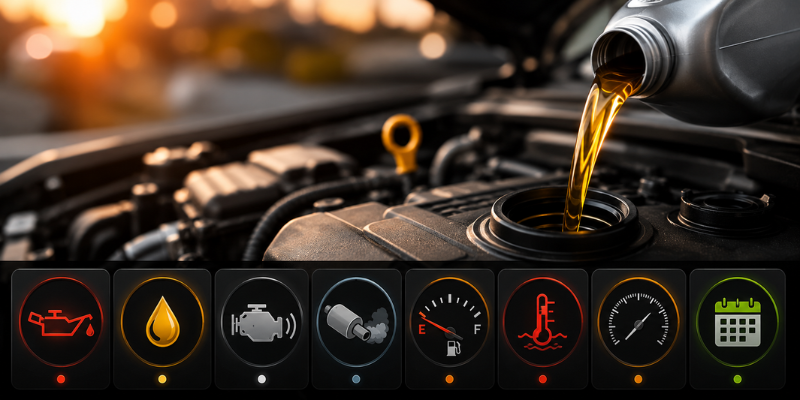
Watch for these warning signs:
- Oil change reminder light
- Dark, dirty oil
- Increased engine noise
- Reduced fuel economy
- Burning oil smell
- Rough engine performance
Regular inspections can help prevent costly repairs.
Common Motor Oil Myths
Myth #1: Thicker Oil Is Always Better
Not true.
Modern engines are designed for specific viscosities.
Myth #2: Synthetic Oil Causes Leaks
Synthetic oil does not create leaks.
It may reveal existing seal issues.
Myth #3: Oil Must Be Changed Every 3,000 Miles
Many modern vehicles can safely exceed this interval.
Myth #4: Dark Oil Means It’s Bad
Oil naturally darkens during normal operation.
Color alone doesn’t determine oil condition.
Quick Checklist Before Buying Oil
Before purchasing oil, verify:
✓ Vehicle year
✓ Make and model
✓ Engine size
✓ Oil viscosity
✓ Oil type
✓ Manufacturer approvals
✓ Oil capacity
✓ Climate requirements
FAQs
Check your owner’s manual, oil cap, VIN lookup tool, or manufacturer website.
Enter your VIN into a dealership or oil manufacturer’s lookup tool to receive exact oil specifications.
Use the viscosity, capacity, and oil type recommended by your vehicle manufacturer.
Online oil finder tools can determine the correct oil based on your vehicle’s year, make, model, and engine.
Only if your manufacturer specifically approves it.
Yes. Synthetic oil generally provides better protection, longer service intervals, and improved performance.
Final Thoughts
Knowing what oil does my car take is one of the simplest ways to protect your engine and avoid costly repairs. Whether you check the oil cap, consult the owner’s manual, use a VIN lookup tool, or try a vehicle-specific oil calculator, always follow the manufacturer’s recommendations.
The right oil improves performance, extends engine life, and helps your vehicle run efficiently for years to come. When in doubt, verify the specification before your next oil change rather than guessing. Your engine will thank you for it.
MORE USEFUL LINKS THAT YOU WILL LIKE:
BackToFrontShow Pricing: Complete Auto Event Guide
Electric Car vs Hybrid 2026: Which One Should You Buy?
Manual vs Automatic Car – Which Is Better in 2026?






- Be Respectful
- Stay Relevant
- Stay Positive
- True Feedback
- Encourage Discussion
- Avoid Spamming
- No Fake News
- Don't Copy-Paste
- No Personal Attacks
- Be Respectful
- Stay Relevant
- Stay Positive
- True Feedback
- Encourage Discussion
- Avoid Spamming
- No Fake News
- Don't Copy-Paste
- No Personal Attacks
