Electric Car vs Hybrid 2026: Which One Should You Buy?
Published: 24 May.2026
Choosing between an electric car vs hybrid 2026 model is not just about new technology. It is about your daily life, driving habits, and real ownership needs.
Some drivers love the quiet ride and low running cost of an electric car. Others prefer the simple refueling and long range of a hybrid. Both can be smart choices. But the best option depends on where you live, how far you drive, how often you travel, and whether you can charge at home.
In today’s auto comparisons, this topic is one of the most important for car buyers. This guide gives you a clear, real-life answer. You will learn the main differences, costs, charging needs, road-trip comfort, maintenance, cold-weather concerns, and the best choice for different types of drivers.
Electric Car vs Hybrid 2026
Here is the simple answer:
- Choose an electric car if you can charge at home, drive mostly predictable routes, and want the lowest fuel cost.
- Choose a hybrid if you want better fuel economy without changing your driving routine.
- Choose a plug-in hybrid if you want short electric driving for daily trips but still need a gas engine for long drives.
In the electric car vs hybrid 2026 debate, the winner is not the most advanced car. The winner is the car that fits your parking, budget, commute, and travel habits.
Electric Car vs Hybrid 2026: Main Difference
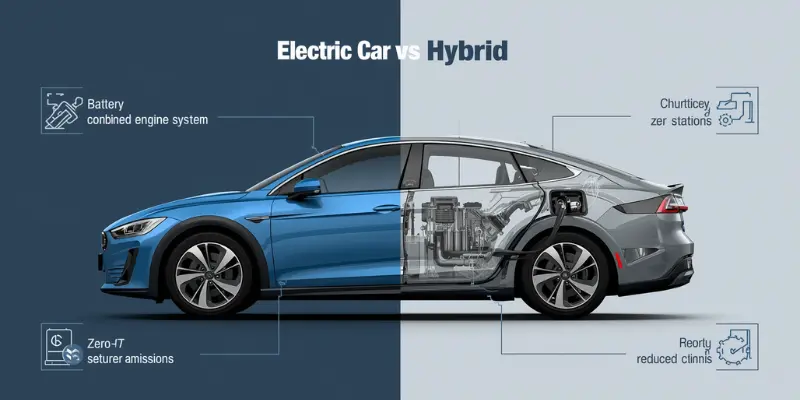
An electric car runs only on electricity. It has a battery and electric motor. You charge it at home, work, or a public charging station.
A hybrid uses both a gasoline engine and an electric motor. You do not plug in a normal hybrid. The car charges its small battery while driving and braking.
A plug-in hybrid, also called a PHEV, sits between the two. It has a bigger battery than a normal hybrid. You can plug it in and drive short distances on electricity, but it also has a gas engine.
| Vehicle Type | How It Works | Best For |
|---|---|---|
| Electric car | Runs only on battery power | Home chargers and daily commuters |
| Hybrid | Uses gas engine + electric motor | Drivers who want simple fuel savings |
| Plug-in hybrid | Uses electricity first, then gas | Mixed driving and short commutes |
MORE USEFUL LINKS THAT YOU WILL LIKE:
Wheel Speed Sensor Symptoms – Signs Causes Diagnosis and Fixes
Cadillac LYRIQ – Do the Driving Modes Offer Different Ranges or Battery Usages?
Best Mileage for a Used Car – A Smart Buyer’s Guide
The 2026 Ownership Test: Ask These 7 Questions
Before buying, ask these questions. They matter more than ads, trends, or hype.
1. Can you charge at home?
Home charging is the biggest EV advantage. If you can charge overnight, an electric car becomes easy to own.
If you cannot charge at home, you may depend on public chargers. That can work, but it takes more planning.
The U.S. Department of Energy explains that EV charging is commonly split into Level 1, Level 2, and DC fast charging. Level 1 is slow, Level 2 is better for home charging, and DC fast charging is mainly for faster public charging stops.
2. Do you live in an apartment?
Apartment drivers need to think carefully. Some apartments offer EV chargers. Many still do not.
If your building has no charger, a hybrid may be easier. You get better fuel economy without worrying about charging access.
3. How far do you drive each day?
If your daily drive is short and predictable, an electric car can be a great fit. Most modern EVs have enough range for normal commuting.
If your daily driving changes often, or you drive long distances for work, a hybrid may feel easier.
4. Do you take long road trips?
Electric cars can handle road trips, but you need to plan charging stops.
Hybrids are simpler for long trips. You stop at a gas station, fill up in a few minutes, and keep going.
5. Do you drive in cold weather?
Cold weather can reduce EV range because the battery and cabin heating need more energy. The Department of Energy recommends winter EV planning, including keeping the vehicle charged and using smart charging habits in cold conditions.
If you live in a very cold area and drive long distances, a hybrid may give you more peace of mind.
6. Are you buying new or used?
Used EVs can be good deals, but battery health matters. Used hybrids are often easier for buyers who want a familiar ownership experience.
7. Do you qualify for incentives?
Do not assume every electric car gets a tax credit. IRS clean vehicle credit rules changed, and eligibility depends on purchase date, vehicle rules, buyer rules, and other details. The IRS says vehicles placed in service after September 30, 2025, have special acquisition-date requirements for eligibility.
Always check current rules before counting a tax credit as part of your savings.
Cost Comparison: Electric Car vs Hybrid 2026
Cost is one of the biggest parts of the electric car vs hybrid 2026 decision.
An electric car can cost more upfront, but it may save money on fuel and routine maintenance. A hybrid usually costs less than many EVs and still gives strong fuel savings.
| Cost Area | Electric Car | Hybrid |
|---|---|---|
| Purchase price | Often higher | Usually lower |
| Fuel cost | Lower with home charging | Lower than gas-only cars |
| Maintenance | Fewer routine engine services | Still needs engine service |
| Charging setup | May need home charger | No charger needed |
| Road trips | Needs charging planning | Easier and faster refueling |
| Insurance | Can be higher | Usually closer to gas cars |
Consumer Reports has found that EV savings depend on energy prices, tax credits, discounts, and hidden costs. This means the cheapest choice is not the same for every buyer.
Fuel and Charging Costs
Electric cars often cost less per mile when charged at home. Electricity is usually cheaper than gasoline on a per-mile basis.
But the real cost depends on:
- Your local electricity rate
- Your local gas price
- Your driving distance
- Your charger access
- Your vehicle efficiency
A hybrid still uses gas, but it uses less than a normal gas-only car. This makes it a smart choice for drivers who want savings without charging.
For plug-in hybrids, the savings depend on one habit: you must plug them in. If you do not charge a plug-in hybrid, you may carry extra battery weight without getting the full benefit.
Charging Reality: Easy for Some, Hard for Others
Charging is where the electric car vs hybrid 2026 choice becomes personal.
An EV is easy when:
- You have a driveway or garage
- You can install Level 2 charging
- You drive mostly local routes
- You rarely need emergency long trips
- You live near reliable public chargers
An EV is harder when:
- You rent an apartment with no charger
- You park on the street
- You drive long rural routes
- You cannot wait at charging stations
- Public chargers near you are limited
A hybrid avoids this problem. You drive it like a normal car, but with better fuel economy.
Range and Road Trips
Electric cars have improved a lot. Many modern EVs offer enough range for daily life and weekend trips.
Still, road trips need planning. You may need to check charger location, charger speed, and charger availability.
Hybrids are easier for long-distance driving. You do not need a charging app. You do not need to wait for the battery. You only need a gas station.
For many families, this is the biggest reason to choose a hybrid in 2026.
Maintenance: Which One Is Easier?
Electric cars have fewer moving parts than gasoline vehicles. They do not need oil changes, spark plugs, or traditional transmission service.
Common EV maintenance includes:
- Tires
- Brakes
- Cabin air filter
- Battery cooling checks
- Software updates
- Brake fluid
Hybrids still have a gas engine. That means they still need:
- Oil changes
- Engine air filters
- Spark plugs over time
- Cooling system checks
- Fuel system care
But hybrids also use regenerative braking, which can reduce brake wear.
So, in the electric car vs hybrid 2026 comparison, EVs usually win on routine maintenance. Hybrids win on familiar repair access and simple long-distance use.
The Plug-In Hybrid Truth
A plug-in hybrid sounds like the perfect middle option. Sometimes it is.
But here is the truth: a plug-in hybrid only makes sense if you actually charge it.
A PHEV is good when:
- Your daily commute is short
- You can charge at home
- You want gas backup for trips
- You want some EV benefits without full EV commitment
A PHEV is not good when:
- You never plug it in
- You mostly drive long highway routes
- You want the simplest vehicle possible
- You do not want two systems to maintain
A normal hybrid may be better than a PHEV if you do not want to think about charging.
Used Electric Car vs Used Hybrid 2026
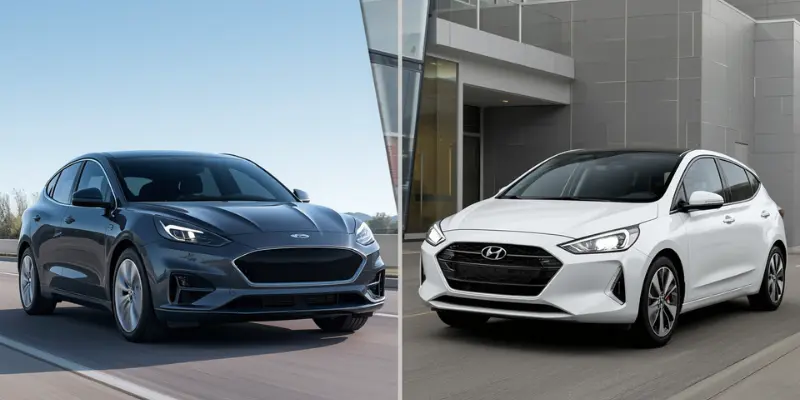
Used buyers need a different checklist.
Used EV checklist
Before buying a used EV, check:
- Battery health report
- Remaining battery warranty
- Real-world range
- Charging port condition
- Fast-charging history
- Tire wear
- Software update history
- Accident history
Battery warranty is important because battery repair can be expensive. Many EV batteries are covered for long periods, but coverage depends on the brand, model, and age of the car.
Used hybrid checklist
Before buying a used hybrid, check:
- Hybrid battery age
- Service records
- Engine maintenance
- Brake condition
- Warning lights
- Fuel economy during test drive
- Warranty coverage
Used hybrids can be a safe choice for budget buyers because they feel familiar and do not need home charging.
Environmental Impact
Electric cars have no tailpipe emissions while driving. That helps local air quality.
Hybrids still burn gasoline, but they use less fuel than many traditional gas cars. This can reduce emissions and fuel use.
The EPA explains that plug-in hybrid labels show fuel economy in both electric and gasoline operation, including MPGe for electric driving. MPGe helps compare electricity use with gasoline energy use.
The cleaner choice depends on how the electricity is produced, how much you drive, and how long you keep the vehicle. But in general, EVs offer the strongest emissions benefit during driving, while hybrids offer a practical step down from gas-only cars.
Best Choice by Driver Type
| Driver Type | Best Choice | Why |
|---|---|---|
| Homeowner with garage | Electric car | Easy overnight charging |
| Apartment renter | Hybrid | No charging stress |
| Short daily commuter | EV or PHEV | Low daily energy cost |
| Long-distance driver | Hybrid | Fast refueling |
| Family road-trip driver | Hybrid or PHEV | More travel flexibility |
| Cold-weather driver | Hybrid or long-range EV | Less range worry |
| Budget used-car buyer | Hybrid | Familiar repairs and no charger |
| Tech-focused driver | Electric car | Quiet ride and modern features |
When an Electric Car Is the Best Choice
An electric car is best when your life supports charging.
Choose an EV if:
- You can charge at home
- You drive predictable routes
- You want low running costs
- You do not mind planning road trips
- You want a quiet and smooth drive
- You want to reduce tailpipe emissions
For the right driver, an EV can feel easier than a gas car. You wake up with charge, skip gas stations, and enjoy a quiet ride.
When a Hybrid Is the Smarter Choice
A hybrid is best when you want fuel savings without lifestyle changes.
Choose a hybrid if:
- You cannot charge at home
- You drive long distances often
- You live in an apartment
- You want simple refueling
- You want lower fuel use
- You do not want range anxiety
In the electric car vs hybrid 2026 debate, hybrids are not outdated. For many drivers, they are the most practical choice.
When You Should Avoid an EV for Now
An electric car may not be right if:
- You depend only on public charging
- You drive through areas with poor charging access
- You cannot install a home charger
- You often take unplanned long trips
- You live in very cold weather and need maximum range
- You are buying only because of hype
This does not mean EVs are bad. It means the fit is not right yet.
Final Verdict: Electric Car vs Hybrid 2026
The best choice depends on your real life.
Choose an electric car if you have reliable charging, drive predictable distances, and want lower daily running costs.
Choose a hybrid if you want better fuel economy, fast refueling, lower stress, and no charging setup.
Choose a plug-in hybrid if you can charge daily but still want gas backup for long trips.
The smartest answer to electric car vs hybrid 2026 is simple:
Do not buy the car that sounds most modern. Buy the car that fits your commute, parking, budget, weather, and road trips.
FAQs
An electric car is better if you can charge at home and drive mostly predictable routes. A hybrid is better if you want fuel savings without charging or range planning.
A hybrid often has a lower purchase price. An electric car may cost less to run if you charge at home and drive enough miles. The better deal depends on local gas prices, electricity rates, incentives, and maintenance costs.
Apartment renters should buy an EV only if they have reliable charging at home, work, or nearby. If charging is difficult, a hybrid is usually easier.
A plug-in hybrid is worth it if you charge it often and your daily drives are short. If you rarely charge it, a normal hybrid may be the better choice.
A hybrid is usually easier for road trips because refueling is fast and gas stations are common. EVs can work well on road trips, but they need charging planning.
Yes, electric cars usually need less routine maintenance because they do not have oil changes or many engine parts. Hybrids still need gas-engine maintenance.
A hybrid is often easier in very cold weather because it does not depend fully on battery range. A long-range EV can still work well if you can charge at home and plan winter driving carefully.
For most buyers who cannot charge at home, a hybrid is the safest choice. For buyers with home charging and a stable commute, an electric car can be the smarter long-term option.
MORE USEFUL LINKS THAT YOU WILL LIKE:
Glass and Mirror Repair – A Clear Guide for Safer Driving and Better Visibility
Wheel Alignment With New Tyres – Do You Need It?
Golf Buggy Tyre Pressure – The Best PSI for a Safer, Smoother Ride




- Be Respectful
- Stay Relevant
- Stay Positive
- True Feedback
- Encourage Discussion
- Avoid Spamming
- No Fake News
- Don't Copy-Paste
- No Personal Attacks
- Be Respectful
- Stay Relevant
- Stay Positive
- True Feedback
- Encourage Discussion
- Avoid Spamming
- No Fake News
- Don't Copy-Paste
- No Personal Attacks
