Golf Buggy Tyre Pressure – The Best PSI for a Safer, Smoother Ride
Published: 01 Apr.2026
Getting your golf buggy tyre pressure right is one of the easiest ways to improve comfort, handling, tyre life, and efficiency. It only takes a few minutes to check, but the payoff is huge. Your buggy will steer better, ride smoother, and put less strain on the battery or engine when the tyres are inflated properly. Club Car’s maintenance guidance also notes that low tyre pressure increases rolling resistance and can reduce vehicle performance and range, which is why this topic is often included in a practical wheels guide for vehicle care.
For most golf buggies, the sweet spot is usually around 18 to 22 PSI, but the exact number depends on your tyre type, wheel size, load, terrain, and the recommendation printed on the tyre sidewall or in the owner’s manual. Some setups sit closer to 15–25 PSI, while certain models can differ. For example, a Yamaha YDRA manual lists 16 PSI, which shows why you should never rely on a one-size-fits-all number.
Quick answer: What is The Best Golf Buggy Tyre Pressure?
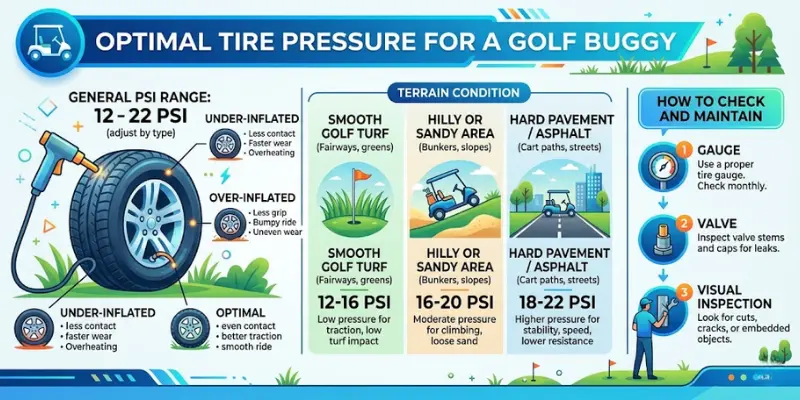
If you want the short answer, start here:
- Most standard golf buggy tyres: 18–22 PSI
- Many street or turf tyres: 20–24 PSI
- Many all-terrain tyres: 18–20 PSI
- Always check your sidewall or manual first for the exact recommendation for your tyre and model.
Golf Buggy Tyre Pressure Chart
Use this as a general guide, not a substitute for the tyre sidewall.
General PSI guide
- Standard stock tyres: 18–22 PSI
- Street / turf tyres: 20–24 PSI
- All-terrain tyres: 18–20 PSI
- Hard paved use: higher end of the approved range
- Grass or softer ground: mid to lower end of the approved range
- Low-profile or larger aftermarket tyres: follow the tyre maker’s recommendation, because these can vary more than stock tyres.
Why Proper Tyre Pressure Matters
A lot of people only check tyre pressure when a tyre looks flat. That is a mistake. Even small pressure changes can affect how your buggy feels and how quickly the tyres wear.
Correct tyre pressure helps you:
- get a smoother, more stable ride
- improve steering and handling
- reduce uneven tread wear
- lower rolling resistance
- protect battery range or fuel efficiency
- reduce strain on the motor or drivetrain
- improve traction for the surface you drive on most often.
Where to Find The Correct PSI For Your Golf Buggy
Before adding air, check these two places:
1. The tyre sidewall
This is usually the fastest way to find the recommended inflation guidance for that exact tyre. Many current guides also point readers to the sidewall first because aftermarket tyres can differ from factory tyres.
2. The owner’s manual
This matters even more if you are running factory tyres or a model with a specific recommendation. As noted earlier, some models can sit below the “average” range, so the manual is worth checking. Yamaha’s YDRA manual, for instance, lists 16 PSI.
How to Check And Adjust Golf Buggy Tyre Pressure
Checking your golf buggy tyre pressure is simple and should become part of your regular maintenance routine.
What you need
- a reliable tyre pressure gauge
- an air pump or compressor
- the correct PSI target for your tyres
Step-by-step
- Check the tyres when they are cold.
That gives you a more accurate reading than checking right after a drive. - Remove the valve cap.
- Press the gauge firmly onto the valve stem.
Read the PSI. - Add or release air slowly.
Do not guess. Recheck after each adjustment. - Match all tyres evenly unless your manual says otherwise.
Uneven pressure can affect handling and wear. EZGO guidance also stresses keeping tyre pressure at the recommended level and consistent across the tyres for proper handling.
MORE USEFUL LINKS THAT YOU WILL LIKE:
Cracks in Tyre Sidewall – What They Mean and When to Replace the Tyre
Best Mileage for a Used Car – A Smart Buyer’s Guide
Hyundai Elantra vs Sonata – Which Hyundai Sedan Is Better for You?
Signs Your Golf Buggy Tyres are Underinflated
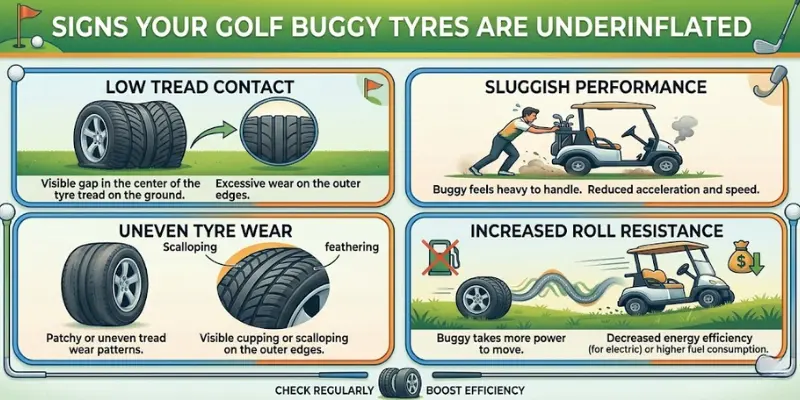
This is one of the biggest gaps in most competitor articles, and it matters because many readers do not own a buggy long enough to recognise the symptoms.
Watch for these signs:
- the buggy feels sluggish
- steering feels heavy
- the ride feels soft or “draggy”
- the tyre shoulders wear faster than the centre
- battery range seems worse than normal
- the buggy struggles more on turns or inclines.
Signs Your Golf Buggy Tyres are Overinflated
Too much air is just as bad as too little.
Common signs include:
- a hard, bouncy ride
- reduced grip on grass or uneven ground
- faster wear in the centre of the tread
- more shock over bumps
- less confidence when cornering on loose surfaces.
How Terrain Affects Golf Buggy Tyre Pressure
This is where many articles stay too general. In real life, the best PSI depends heavily on where you drive.
On paved roads or hard surfaces
Use the higher end of the approved range for better handling and lower rolling resistance. A golf buggy maintenance source specifically recommends the higher allowable range on paved or hard surfaces.
On grass
Stay closer to the middle of the approved range. You want enough pressure for clean handling, but not so much that the buggy rides harshly or loses grip.
On gravel, dirt, or rough tracks
Many all-terrain tyres work better toward the lower end of their approved range to improve grip and comfort, but you should stay within the tyre maker’s specification. Golf cart tyre guides commonly place many all-terrain setups around 18–20 PSI.
On sand or very soft ground
A slightly lower pressure within the approved range can increase the contact patch and help the buggy float better, but do not go so low that you risk instability or tyre damage. Competitor material you shared also touched on this idea, but did not explain the trade-off clearly enough.
How Passenger Load Changes Tyre Pressure
Another thing your competitors barely explain is load.
If you regularly carry:
- extra passengers
- tools
- coolers
- work gear
- a rear cargo box
your tyres may need to sit toward the higher end of the approved range to stay stable and wear evenly. The right move is not to invent a PSI number, but to use the tyre sidewall or manual and adjust within that approved range based on load and real-world performance. Current tyre guides also note that PSI varies by load and tyre brand.
Temperature and Seasonal Tyre Pressure Changes
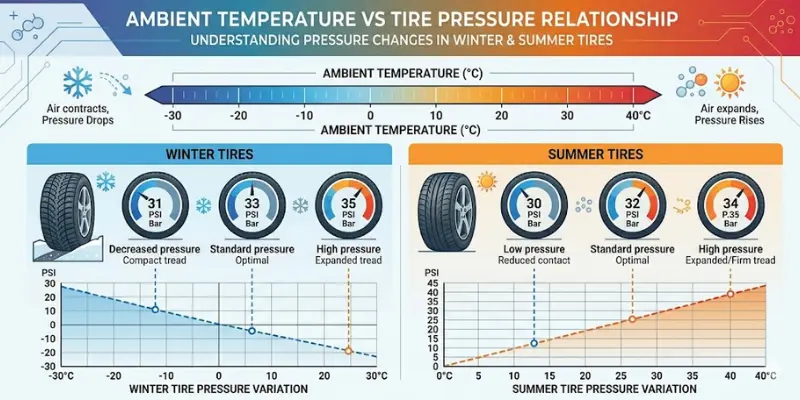
Tyre pressure changes with temperature. In cooler weather, tyres can lose pressure. In hotter weather, pressure rises. That means a buggy that felt perfect last month may be off today without any puncture at all. Several current golf cart tyre guides recommend checking pressure more often when temperatures swing.
Simple rule
- check more often during season changes
- recheck after very hot or very cold nights
- never assume last month’s PSI is still correct today
How Often Should You Check Golf Buggy Tyre Pressure?
A good habit is to check:
- every 2 to 4 weeks
- before a long outing
- after a big temperature change
- if the buggy feels different while driving
- after hitting a kerb, pothole, or sharp object
That is a small task that can save you money on tyres and prevent poor performance later. Competitor guidance often suggests regular monthly checks, but making it every 2 to 4 weeks is even more practical for real owners.
Common Mistakes to Avoid
Guessing the pressure by eye
Golf buggy tyres can look “fine” and still be several PSI off.
Only checking one tyre
All tyres should be checked. One low tyre can affect how the whole buggy handles.
Ignoring tyre type
Street tyres, turf tyres, and all-terrain tyres do not always perform best at the same pressure.
Forgetting about temperature
Weather changes can quietly throw your PSI off.
Waiting until the ride feels bad
By then, uneven tread wear may already have started.
Quick Maintenance Checklist
Use this fast routine to keep your golf buggy tyres in good shape:
- check tyre pressure every 2 to 4 weeks
- inspect tread wear for centre or edge wear
- look for nails, cuts, and slow leaks
- keep valve caps fitted
- rotate tyres if wear becomes uneven
- recheck pressure after adding passengers or cargo for regular work use
- always compare your gauge reading with the sidewall or manual recommendation.
FAQs About Golf Buggy Tyre Pressure
For many buggies, it is around 18–22 PSI, but some tyres fall outside that range. Always confirm on the tyre sidewall or in the manual.
Usually yes, unless the manufacturer specifies otherwise. Some vehicles with unusual setups can differ, but most owners should follow the manual or tyre guidance for all four tyres.
Yes. Club Car states that low tyre pressure increases rolling resistance, which reduces performance and range.
For many standard golf buggy tyres, yes, that would be too high. Some specialty or off-road tyres may allow higher figures, which is why the sidewall recommendation matters. Several guides place standard-use setups closer to the mid-teens or low 20s, not 30 PSI.
Not always. Hard surfaces usually suit the higher end of the approved range, while rougher or softer ground may work better closer to the lower end of that approved range.
Final Thoughts
The best golf buggy tyre pressure is not just about copying a random PSI number from the internet. It is about matching the pressure to your tyre type, terrain, load, and manufacturer guidance. For many owners, that means landing around 18 to 22 PSI, but the right answer for your buggy is the one printed on your tyre or listed in your manual.
If you make tyre pressure part of your monthly maintenance routine, your buggy will feel better to drive, your tyres will last longer, and you will avoid the kind of uneven wear and poor handling that many owners only notice when it is already costing them money.
MORE USEFUL LINKS THAT YOU WILL LIKE:
Wheel Alignment With New Tyres – Do You Need It?
Car Buying Guide Texas: How to Buy Smart and Avoid Costly Mistakes
Dual Turbo vs Twin Turbo – What’s the Real Difference?



- Be Respectful
- Stay Relevant
- Stay Positive
- True Feedback
- Encourage Discussion
- Avoid Spamming
- No Fake News
- Don't Copy-Paste
- No Personal Attacks
- Be Respectful
- Stay Relevant
- Stay Positive
- True Feedback
- Encourage Discussion
- Avoid Spamming
- No Fake News
- Don't Copy-Paste
- No Personal Attacks
