Cracks in Tyre Sidewall – What They Mean and When to Replace the Tyre
Published: 02 Apr.2026
If you have noticed cracks in tyre sidewall, it is normal to feel concerned. Many drivers see small lines in the rubber and wonder whether they are harmless surface marks or a sign that the tyre is no longer safe.
The truth is simple: some minor cracks may start as surface ageing, but visible sidewall cracking should never be ignored. A tyre sidewall supports constant flexing, heat, weight, and road stress. Once the rubber begins to break down, the risk of sudden failure increases over time, which is why this topic is often covered in a detailed wheels guide for vehicle safety.
This guide explains everything in plain English, including what causes sidewall cracks, when they become dangerous, whether they can be repaired, and how to prevent them in the future.
Quick Answer: Are Cracks in Tyre Sidewall Dangerous?
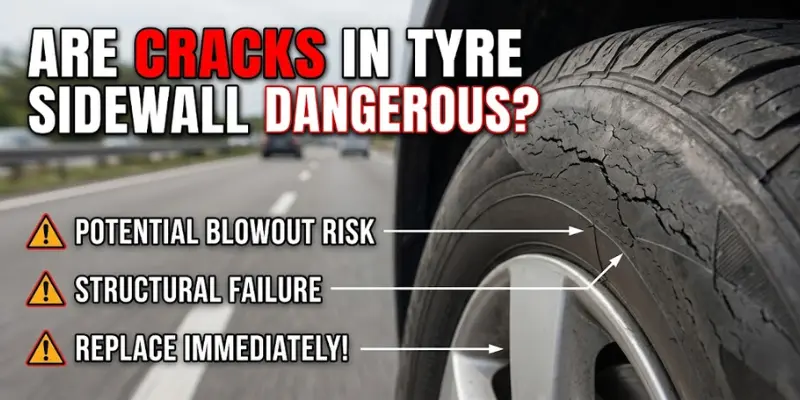
Yes, they can be.
Small, shallow cracks may begin as early signs of rubber ageing, but deep, spreading, or multiple cracks in a tyre sidewall can make the tyre unsafe. The sidewall is one of the most sensitive parts of the tyre. Damage here can weaken the tyre’s structure and raise the risk of a blowout.
Replace the tyre as soon as possible if:
- The cracks look deep
- The cracks are growing in length or number
- You can see cords, fabric, or inner material
- There is also a bulge, cut, or puncture
- The tyre is old, brittle, or losing pressure
- The cracks extend towards the tread area
If you are unsure, the safest move is to have the tyre checked by a professional immediately.
What Are Tyre Sidewall Cracks?
Tyre sidewall cracks are small splits, lines, or fissures that appear on the outer side of the tyre. They are often called:
- sidewall cracking
- tyre dry rot
- weather cracking
- rubber deterioration
These cracks happen when the rubber starts to lose flexibility and strength. At first, they may look cosmetic. Over time, they can become a serious safety problem.
Why Cracks in Tyre Sidewall Happen
Tyres are made to be tough, but they do not last forever. Rubber slowly breaks down with age and exposure.
Common causes of tyre sidewall cracking
1. Ageing rubber
Even if the tread still looks good, the tyre rubber can harden and dry out over time. This is one of the most common reasons for cracks in tyre sidewall.
2. Sun and UV exposure
Strong sunlight damages rubber. If a vehicle is regularly parked outside, especially in hot weather, UV rays can speed up sidewall cracking.
3. Extreme temperatures
Heat causes the rubber to expand, while cold weather can make it stiff and brittle. Repeated temperature changes put stress on the sidewall.
4. Incorrect tyre pressure
Both underinflation and overinflation are bad for sidewalls.
- Underinflated tyres flex too much and create extra heat
- Overinflated tyres put extra stress on the tyre structure
Either problem can shorten tyre life.
5. Long periods without driving
A vehicle that sits parked for weeks or months can develop tyre cracking faster. Tyres do better when they are used regularly.
6. Road salt, chemicals, and contamination
Salt, oil, petrol, harsh cleaners, and petroleum-based tyre shine products can damage rubber and speed up deterioration.
7. Poor storage conditions
Tyres stored in direct sun, damp areas, or near chemicals often age faster.
8. Impact damage
Potholes, kerbs, and rough roads can weaken the sidewall. Sometimes the crack appears later, after the initial impact.
9. Manufacturing defects
This is less common, but it can happen. If a newer tyre shows unusual cracking early in its life, a defect may be involved.
Are All Sidewall Cracks Equally Serious?
No. Some are minor at first, while others are a clear sign that the tyre should be replaced.
Minor cracking
These are usually:
- very fine hairline cracks
- small surface marks
- limited to one small area
Even then, they should still be monitored closely.
Serious cracking
This is more dangerous and may include:
- deep or wide cracks
- several cracks across the sidewall
- cracks that are easy to see from a distance
- cracks reaching the shoulder or tread
- chunks missing from the rubber
- exposed internal material
Once cracks move beyond light surface ageing, the tyre is no longer something to “watch and wait” casually.
Can You Drive With Cracks in Tyre Sidewall?
This depends on the severity, but driving on a cracked sidewall is always a risk.
A sidewall flexes constantly while the vehicle moves. Unlike the centre tread area, the sidewall is not a part of the tyre that can safely handle structural damage for long.
You should avoid driving if:
- the cracks are deep
- the tyre has a bulge
- the tyre is leaking air
- the cracks are near the bead or shoulder
- the tyre looks dry, brittle, or damaged overall
- you plan to drive at motorway speeds
- you carry passengers, heavy loads, or travel long distances
A cracked tyre might hold air today and fail tomorrow. That is what makes sidewall damage risky.
Can Cracks in Tyre Sidewall Be Repaired?
In most cases, no.
This is one of the biggest points many drivers need clarified: sidewall damage is generally not repairable in a safe and approved way.
Why sidewall cracks cannot usually be repaired
- The sidewall flexes more than the tread
- Repairs in this area do not hold up well under load and heat
- Structural weakness remains even if the surface is patched
- A repaired sidewall still has a higher risk of failure
Important rule
Tyre repairs are typically limited to the central tread area, not the sidewall or shoulder.
So if you are wondering whether a garage can simply patch cracks in tyre sidewall, the honest answer is that replacement is usually the only safe solution.
MORE USEFUL LINKS THAT YOU WILL LIKE:
Car Door Handle Repair Cost: What You Should Expect to Pay
Wheel Alignment With New Tyres – Do You Need It?
Car Buying Guide Texas: How to Buy Smart and Avoid Costly Mistakes
Sidewall Cracks vs Tread Cracks : What Is Worse?
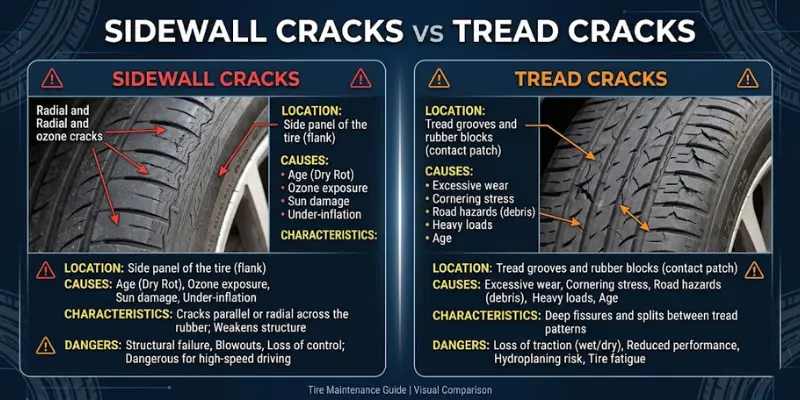
Both matter, but sidewall cracks are especially concerning because the sidewall handles constant bending and load changes.
Sidewall cracks
These often point to:
- rubber ageing
- UV damage
- pressure problems
- structural weakness
Tread cracks
These may suggest:
- deeper dry rot
- ageing under the tread surface
- possible separation risk
- internal tyre breakdown
If cracks appear between tread blocks or seem to travel from the sidewall into the tread, get the tyre inspected right away.
How to Check a Tyre for Dangerous Cracks
You do not need to be a mechanic to do a basic tyre inspection.
Use this simple 6-step check
1. Look at the full sidewall
Turn the steering wheel or move the car slightly so you can inspect the whole tyre.
2. Check for hairline cracks
Look closely for fine lines in the rubber. Use your phone torch if needed.
3. Look for depth
If the cracks look deep or dark, that is more serious than faint surface marks.
4. Check for spreading
Are the cracks increasing in number? Are they in more than one area?
5. Inspect for bulges, cuts, or missing rubber
A bulge plus cracking is a strong warning sign.
6. Check the tyre age
Even if the tread depth is still legal, an old tyre with sidewall cracks may still need replacing.
How Old Is Too Old for a Tyre?
This is an important point many articles do not explain clearly enough.
A tyre can look usable because the tread is still deep, but age matters just as much as tread depth.
As tyres get older:
- the rubber loses elasticity
- cracking becomes more likely
- heat resistance drops
- the risk of sudden failure increases
A tyre may still have plenty of tread but still be unsafe because of age and sidewall deterioration.
Practical rule
If a tyre is older and already showing visible sidewall cracks, replacement is usually the safer choice.
Signs You Should Replace the Tyre Immediately
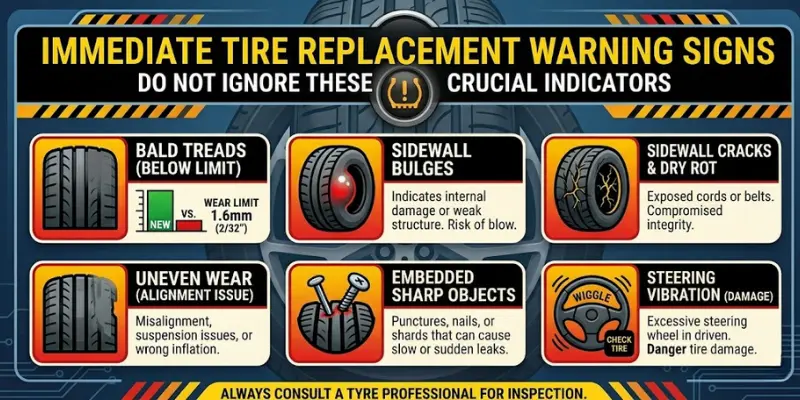
Replace the tyre now if you notice any of the following:
- Deep cracks in the sidewall
- Cracks all around the tyre
- Exposed cords or inner layers
- Sidewall bulge or blister
- Air pressure loss
- Cracking near the tread shoulder
- Pieces of rubber flaking away
- Strong vibration while driving
- The tyre is old and visibly dried out
- The vehicle has been sitting unused for a long time and the tyres look brittle
This is not an area where delaying helps. Sidewall failure can happen suddenly.
How to Prevent Cracks in Tyre Sidewall
You cannot stop tyres from ageing forever, but you can slow the process.
Best ways to prevent sidewall cracking
Keep tyres properly inflated
Check pressure at least once a month and before long trips.
Park in a garage or shaded area
Less sun exposure means less UV damage.
Drive the car regularly
Tyres that sit too long often age faster.
Clean tyres with mild soap and water
Avoid harsh chemicals and petroleum-based tyre products.
Avoid hitting kerbs and potholes
Impacts can weaken the sidewall, even if the damage is not visible at first.
Store spare or seasonal tyres correctly
Keep them away from direct sunlight, moisture, and chemicals.
Inspect tyres often
A two-minute visual check can help you catch small problems before they become dangerous.
Common Myths About Sidewall Cracks
“The tyre still has good tread, so it must be fine.”
Not always. A tyre can have good tread but still be unsafe because the rubber is old and cracked.
“Small cracks are only cosmetic.”
Sometimes they begin that way, but they can grow. Sidewall cracking should always be monitored.
“I can just patch the sidewall.”
No. Sidewall repairs are generally not considered safe.
“If the tyre is not losing air, it is okay.”
Not necessarily. Structural damage can exist before air loss starts.
“Cracks only happen on very old tyres.”
Usually age is a major factor, but poor storage, sunlight, pressure issues, and chemicals can cause earlier cracking too.
When to See a Tyre Professional
Book an inspection as soon as possible if:
- you are unsure how deep the cracks are
- the tyre looks dry and aged
- the vehicle pulls or vibrates
- the cracks are on more than one tyre
- the damage appeared quickly
- the tyres are several years old
A professional can tell whether the tyre is still usable or whether replacement is the safer option.
Final Verdict
Cracks in tyre sidewall are never something to ignore. In some cases, they begin as light surface ageing. But because the sidewall is such a critical part of the tyre, even small cracks deserve attention.
If the cracks are deep, spreading, or paired with bulges, air loss, or old tyre age, replace the tyre immediately. Do not rely on a patch or assume the tyre is safe just because the tread still looks good.
When it comes to tyre safety, being cautious is always the better decision. A new tyre costs less than the damage and danger caused by a sidewall failure.
FAQs
They can be, especially if the damage is severe enough to affect safety. Deep cracking, exposed cords, or obvious structural weakness can lead to failure.
Small surface cracks can happen as tyres age, but they are still a warning sign. They should be monitored and inspected.
It depends on the severity, but it is risky. If the cracks are deep, spreading, or combined with any other damage, do not drive on the tyre.
Dry rot is usually caused by ageing, sunlight, heat, poor storage, lack of use, and chemical exposure.
That depends on the condition and age of the other tyres. If only one tyre is damaged, one replacement may be enough. But if multiple tyres are old and cracked, replacing more than one may be the smarter choice.
MORE USEFUL LINKS THAT YOU WILL LIKE:
Dual Turbo vs Twin Turbo – What’s the Real Difference?
Best Mileage for a Used Car – A Smart Buyer’s Guide
Car Bumper Scratch Repair Cost – What You’ll Really Pay






- Be Respectful
- Stay Relevant
- Stay Positive
- True Feedback
- Encourage Discussion
- Avoid Spamming
- No Fake News
- Don't Copy-Paste
- No Personal Attacks
- Be Respectful
- Stay Relevant
- Stay Positive
- True Feedback
- Encourage Discussion
- Avoid Spamming
- No Fake News
- Don't Copy-Paste
- No Personal Attacks
