Wheel Speed Sensor Symptoms – Signs Causes Diagnosis and Fixes
Published: 22 Apr.2026
If your ABS light is on, your traction control suddenly stops working, or your car feels strange when braking, a bad wheel speed sensor could be the reason.
Wheel speed sensors are small parts, but they play a big role in how your vehicle stays stable and safe. They help systems like ABS, traction control, and stability control know exactly how fast each wheel is turning. When one sensor starts failing, your vehicle may receive the wrong information and respond in ways that feel confusing or even dangerous.
In this Wheels guide, you will learn the most common wheel speed sensor symptoms, what causes them, how to diagnose the issue properly, and when it is time to repair or replace the sensor.
What Is a Wheel Speed Sensor?
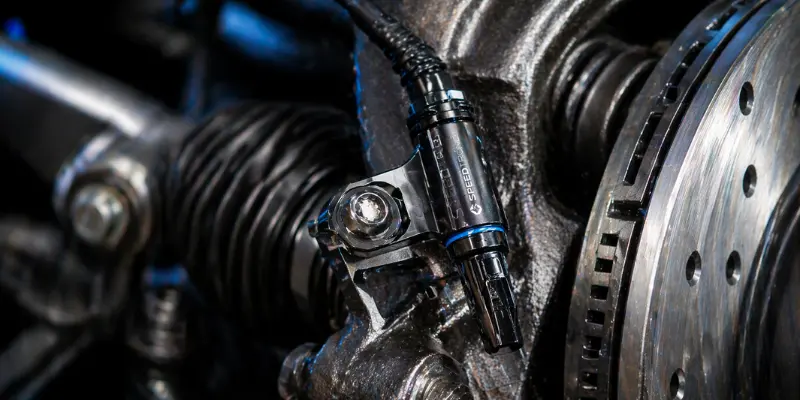
A wheel speed sensor monitors the speed of each wheel and sends that information to your vehicle’s control module. The system uses that data to support:
- Anti-lock Braking System (ABS)
- Traction control
- Electronic stability control
- Sometimes cruise control
- Sometimes speedometer-related functions
In simple words, the sensor helps your car understand whether one wheel is slowing down, slipping, or locking up faster than the others. The competitor articles consistently explain that wheel speed sensors feed ABS and related safety systems, but many do not fully connect that role to real-world driving symptoms.
What Happens When a Wheel Speed Sensor Goes Bad?
When a sensor sends weak, erratic, or no signal at all, the car may no longer trust the wheel-speed data. To protect you, it may disable certain safety systems. That is why a faulty sensor can trigger warning lights and cause ABS or traction control to stop working properly.
This is also why bad wheel speed sensor symptoms can show up in more than one system at the same time.
Most Common Wheel Speed Sensor Symptoms
Here are the most common signs to watch for.
1. ABS Warning Light Turns On
This is one of the most common ABS wheel speed sensor symptoms.
If the ABS module detects a missing or incorrect signal from one wheel, it usually stores a fault code and turns on the ABS warning light. In many vehicles, this is the first sign something is wrong.
What this usually means:
- The ABS system found a wheel-speed-related problem
- ABS may be reduced or disabled
- The issue may be the sensor, wiring, connector, or tone ring
2. Traction Control or Stability Control Light Comes On
A failing sensor can also affect traction control and stability control because those systems depend on accurate wheel-speed data.
Common signs include:
- Traction control light on
- Stability control light on
- Less help on wet, snowy, or slippery roads
This is one of the most overlooked faulty wheel speed sensor symptoms, especially when drivers focus only on the ABS light.
3. ABS Activates When It Should Not
This is a symptom many basic articles do not explain well.
A weak or erratic sensor can falsely tell the ABS module that a wheel is locking up, even when it is not. This may cause the ABS to activate during a normal stop, especially at low speed.
You may notice:
- Brake pedal pulsing for no clear reason
- Buzzing or grinding during gentle braking
- ABS activating right before the car fully stops
If this happens, do not assume the brake pads or rotors are the only issue. A bad sensor signal can cause the same feeling.
4. Unusual or Inconsistent Braking
Another major bad wheel speed sensor symptom is strange braking behavior.
You may notice:
- Longer stopping distance in slippery conditions
- Uneven brake feel
- Reduced confidence during hard braking
- The car feeling less stable when stopping suddenly
The brakes may still work, but the smart systems that help control them may not work correctly.
5. Speedometer Problems on Some Vehicles
Not every vehicle uses wheel-speed sensors the same way. On some cars, a bad sensor can affect the speedometer or vehicle-speed display.
Possible signs:
- Speedometer needle jumps
- Speed reading looks inaccurate
- Speedometer stops working correctly
This symptom is real, but it does not happen on every vehicle. Some competitor articles mention it without making that clear enough.
6. Cruise Control Stops Working
Some vehicles use wheel-speed data for cruise control. If that signal becomes unreliable, cruise control may stop working or turn off suddenly.
Possible signs:
- Cruise control will not engage
- Cruise control disconnects without warning
- Cruise system behaves inconsistently
7. More Wheel Slip During Acceleration
A failing sensor may also weaken traction control performance, especially in rain, snow, mud, or gravel.
You may notice:
- Tires spin more easily
- Less grip when accelerating
- Vehicle feels less stable leaving a stop
This can be one of the more subtle front wheel speed sensor symptoms or rear wheel speed sensor symptoms, depending on which wheel is affected and whether the vehicle is front-wheel drive, rear-wheel drive, or all-wheel drive.
Front Wheel Speed Sensor Symptoms vs Rear Wheel Speed Sensor Symptoms
Many articles mention symptoms in general, but very few explain that the location of the bad sensor can slightly change what you notice.
Front Wheel Speed Sensor Symptoms
A faulty front wheel speed sensor may be more noticeable because the front wheels play a major role in steering and braking feel.
Possible clues:
- ABS activates strangely during slow stops
- Steering feels less confident on slick roads
- More noticeable instability during braking
- Traction or ABS warning lights
Rear Wheel Speed Sensor Symptoms
A bad rear wheel speed sensor may still trigger the same warning lights, but drivers sometimes notice:
- Stability control issues during turns
- Rear-wheel slip or instability on wet roads
- Less obvious steering-related feel
- Unexpected ABS or traction intervention
Important note: the exact symptoms depend on vehicle design. You cannot always identify the bad corner by feel alone. A proper scan and inspection matter more than guessing.
MORE USEFUL LINKS THAT YOU WILL LIKE:
Honda Civic vs Toyota Corolla – Which One Is Better for You?
Used Car Inspection Checklist Before Buying – What to Check Before You Say Yes
Golf Buggy Tyre Pressure – The Best PSI for a Safer, Smoother Ride
What Causes Wheel Speed Sensor Failure?
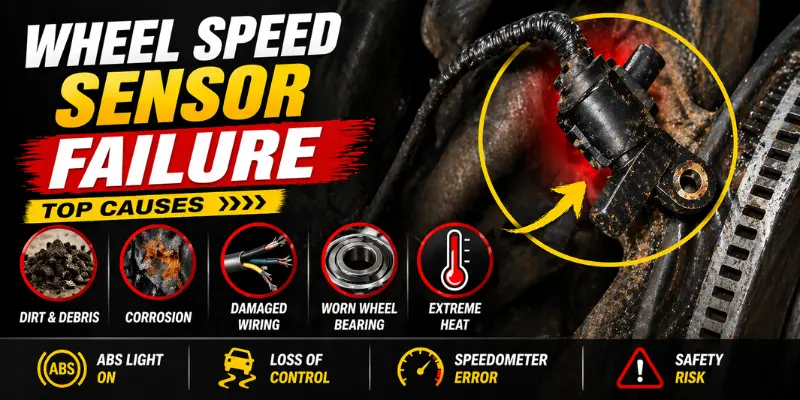
Wheel speed sensors work in a harsh environment. They sit close to the wheel hub, brakes, moisture, dirt, road salt, and heat. Over time, that takes a toll.
Common causes include:
Dirt and Metal Debris
Brake dust, grime, and small metal particles can build up around the sensor and interfere with the signal.
Rust and Corrosion
Corrosion around the sensor mount, connector, or tone ring can weaken or distort the reading.
Damaged Wiring
This is one of the biggest missed points in many articles. Sometimes the sensor is fine, but the wire is cut, stretched, rubbed through, or corroded near the connector.
Bad Tone Ring or Reluctor Ring
The tone ring is the part the sensor reads. If it cracks, rusts, or gets damaged, the sensor can report bad data even when the sensor itself still works.
Wheel Bearing or Hub Problems
On some vehicles, the sensor works closely with the hub assembly. A bad wheel bearing, excessive play, or hub damage can create sensor problems or false readings.
Heat, Age, and Vibration
Over time, heat cycles, vibration, and normal wear can damage the sensor internally.
The competitor content commonly lists dirt, corrosion, physical damage, and electrical issues, but most do not explain well that the sensor is not always the actual failed part. That is a major gap you can beat.
How to Diagnose Wheel Speed Sensor Symptoms Properly
This is where many articles stay too basic. They say “scan it” and stop there. A better diagnosis follows a process.
Step 1: Check the Warning Lights
Look for:
- ABS light
- Traction control light
- Stability control light
- Check engine light in some vehicles
Step 2: Read ABS Trouble Codes
Use a scan tool that can read ABS codes, not just engine codes.
This is important because a code pointing to one wheel does not always mean the sensor itself is bad. It can also mean:
- Broken wiring
- Corroded connector
- Damaged tone ring
- Hub or bearing issue
- Weak signal from contamination
Step 3: Inspect the Sensor Area
Check for:
- Frayed or broken wires
- Loose electrical connectors
- Rust buildup
- Physical sensor damage
- Dirt or metal debris
Step 4: Inspect the Tone Ring
Look for:
- Cracks
- Missing teeth
- Heavy rust
- Dirt packed into the ring
Step 5: Compare Live Wheel-Speed Data
A good scan tool can show live wheel-speed readings while driving. If one wheel drops out, spikes, or reads differently from the others, that gives you a much clearer clue.
Step 6: Check the Hub or Bearing If Needed
If the sensor and wiring look fine but the reading is still unstable, the problem may be deeper in the hub assembly.
Can You Drive With a Bad Wheel Speed Sensor?
Technically, the car may still drive. But that does not mean it is a good idea.
Driving with a faulty sensor can leave you with:
- No ABS support during emergency braking
- Reduced traction control
- Reduced stability control
- Less predictable braking on wet or icy roads
So while you may still be able to move the vehicle, it is best to repair the issue quickly, especially if you drive in rain, snow, traffic, or at highway speeds.
Does a Bad Wheel Speed Sensor Always Need Replacement?
Not always.
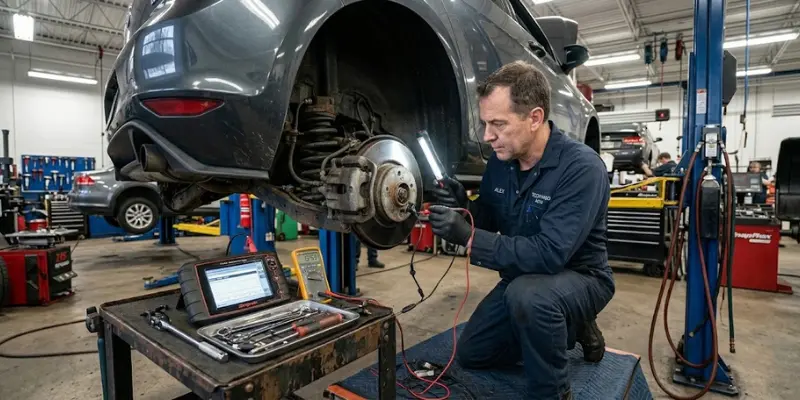
In some cases, the real fix is:
- Cleaning debris from the sensor area
- Repairing damaged wiring
- Replacing a corroded connector
- Fixing the tone ring
- Replacing the wheel hub assembly
If the sensor has failed internally, then replacement is the correct repair.
This matters because replacing parts too quickly without checking wiring or the tone ring can waste time and money.
Wheel Speed Sensor Symptoms vs Vehicle Speed Sensor Symptoms
Some competitor articles mix wheel speed sensors with transmission speed sensors or vehicle speed sensors. That makes the topic less clear.
Here is the simple difference:
Wheel Speed Sensor Symptoms
- ABS light
- Traction control light
- Stability control problems
- Strange ABS activation
- Odd braking behavior
- Possible speedometer issues on some vehicles
Vehicle or Transmission Speed Sensor Symptoms
- Rough shifting
- Delayed shifting
- Limp mode
- Transmission-related trouble codes
If your main keyword is wheel speed sensor symptoms, keep the article focused on the wheel/ABS side of the topic.
How Much Does It Cost to Fix a Wheel Speed Sensor?
The cost depends on:
- Your vehicle make and model
- Front or rear sensor location
- Whether the sensor is separate or built into the hub
- Labor time
- Rust or seized bolts
- Whether wiring or the wheel bearing also needs repair
Sometimes the sensor itself is affordable, but labor or related repairs can increase the total bill.
Quick Summary of Bad Wheel Speed Sensor Symptoms
If you want a simple checklist, here are the most common bad wheel speed sensor symptoms:
- ABS warning light stays on
- Traction control light comes on
- Stability control warning appears
- Brake pedal pulses during normal braking
- ABS activates when it should not
- Braking feels strange or inconsistent
- Speedometer acts erratically on some vehicles
- Cruise control stops working
- Wheel slip increases on slippery roads
FAQs
The first signs are usually the ABS light, traction control light, or unusual ABS activation during braking.
Yes. It can disable or confuse the ABS system, which may lead to less stable braking, especially on slippery roads.
Yes, but only on some vehicles. It depends on how the vehicle uses wheel-speed data.
Sometimes cleaning helps if dirt, rust, or metal debris is affecting the signal. If the sensor is internally damaged, cleaning will not fix it.
Not always. A code tells you where the system sees a problem, but the real cause could be the sensor, wiring, connector, tone ring, or hub.
They can feel slightly different depending on vehicle design, but warning lights and ABS/traction issues are common in both cases.
Final Thoughts
Wheel speed sensors are easy to overlook, but the symptoms of failure can affect some of the most important safety systems in your vehicle. If you notice ABS warnings, traction control issues, strange braking behavior, or sudden stability problems, do not ignore them.
The smartest approach is to confirm the fault with proper ABS diagnostics, inspect the wiring and tone ring carefully, and repair the real cause instead of guessing. That not only saves money, but also helps restore the safety systems your vehicle depends on every day.
MORE USEFUL LINKS THAT YOU WILL LIKE:
Car Dent Repair Cost: What You’ll Really Pay in 2026
Wheel Alignment With New Tyres – Do You Need It?
Car Buying Guide Texas: How to Buy Smart and Avoid Costly Mistakes



- Be Respectful
- Stay Relevant
- Stay Positive
- True Feedback
- Encourage Discussion
- Avoid Spamming
- No Fake News
- Don't Copy-Paste
- No Personal Attacks
- Be Respectful
- Stay Relevant
- Stay Positive
- True Feedback
- Encourage Discussion
- Avoid Spamming
- No Fake News
- Don't Copy-Paste
- No Personal Attacks
