Used Car Inspection Checklist Before Buying – A Complete Buyer Guide
Published: 02 Apr.2026
Buying a used car can be a smart way to save money. But it can also be risky if you do not check the car properly.
A used car may look clean in photos. The seller may also say it runs great. But hidden problems can still exist. These may include engine leaks, accident repairs, flood damage, worn brakes, bad tires, title issues, or mileage problems.
That is why you need a clear Used Car Inspection Checklist Before Buying. This guide will help you inspect the car step by step before you make a payment.
I reviewed several competitor articles, and most of them cover basic checks like exterior condition, tires, engine bay, test drive, vehicle history reports, and pre-purchase inspections. But many of them do not explain private seller risks, simple cost clues, printable checklist use, walk-away rules, and what to do after the inspection in enough detail.
This article fills those gaps in a simple and helpful way. You will also find practical buying tips that can help you avoid common mistakes, spot warning signs, and feel more confident before choosing a used car.
Why You Need a Used Car Inspection Checklist Before Buying
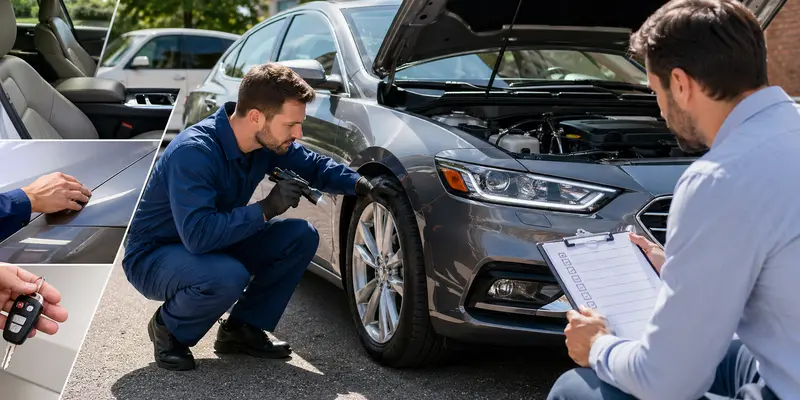
A used car inspection checklist protects you from making a costly mistake.
It helps you check:
- The real condition of the car
- The title and ownership details
- Past accidents or flood damage
- Engine and transmission health
- Tire, brake, and suspension condition
- Warning signs during the test drive
- Repair costs before negotiation
A checklist also keeps you calm. When you are excited about a car, it is easy to miss problems. A written checklist helps you stay focused.
MORE USEFUL LINKS THAT YOU WILL LIKE:
Dual Turbo vs Twin Turbo – What’s the Real Difference?
Cadillac LYRIQ – Do the Driving Modes Offer Different Ranges or Battery Usages?
Wheel Alignment With New Tyres – Do You Need It?
Quick Used Vehicle Inspection Checklist
Use this quick checklist before buying any used car:
- Check the VIN
- Run a vehicle history report
- Review the title
- Check for open recalls
- Inspect the body and paint
- Look for rust
- Check tires and wheels
- Test lights
- Inspect the interior
- Check for flood signs
- Test electronics
- Inspect engine bay
- Check fluids
- Look under the car for leaks
- Start the engine cold
- Take a proper test drive
- Test brakes
- Check steering
- Listen for strange noises
- Review service records
- Get a mechanic inspection
- Negotiate with repair facts
- Complete paperwork safely
You can use this as a free used car inspection checklist before visiting a seller or dealership.
Check the VIN First
Before you fall in love with the car, ask for the VIN. VIN means Vehicle Identification Number. It is the car’s unique identity number.
You can usually find the VIN:
- On the dashboard near the windshield
- Inside the driver-side door frame
- On the title
- On insurance or registration papers
Make sure the VIN on the car matches the VIN on the title and records. If the VIN does not match, do not buy the car.
This is one of the most important steps in any used vehicle inspection checklist.
Run a Vehicle History Report
A vehicle history report can show important past records.
It may show:
- Accident history
- Flood damage
- Salvage title
- Rebuilt title
- Number of previous owners
- Mileage records
- Service history
- Open recalls
- Past title problems
A clean report is good, but it does not always mean the car is perfect. Some repairs or accidents may not appear in the report. So, you still need a physical inspection.
Understand the Title Before Buying
The title tells you the legal status of the car.
Here are common title types:
Clean Title
A clean title usually means the car has not been declared a total loss by an insurance company.
Salvage Title
A salvage title means the car was badly damaged in the past. This could be from an accident, flood, fire, or other major issue.
Rebuilt Title
A rebuilt title means the car was once salvage but repaired and approved for road use again.
Lien Title
A lien means someone may still owe money on the car. Do not buy the car until the lien is cleared.
A clean title is usually safer. Be very careful with salvage or rebuilt cars.
Check the Exterior Body
Walk around the car slowly in daylight.
Look for:
- Dents
- Scratches
- Rust
- Uneven paint
- Mismatched panels
- Large panel gaps
- Cracked glass
- Broken lights
- Signs of repainting
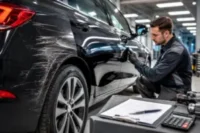
Uneven paint or body gaps can mean the car was repaired after an accident.
Also check the doors, hood, and trunk. Open and close them. They should close smoothly. If one door feels hard to close, the frame may not be straight.
Look for Rust and Hidden Damage
Rust can become expensive if it spreads.
Check these areas:
- Wheel wells
- Door edges
- Rocker panels
- Trunk floor
- Under the car
- Around the windshield
- Around the fuel cap
Small surface rust may not be a big issue. But deep rust on the frame, underbody, or suspension area is serious.
If you see heavy rust under the car, it may be better to walk away.
Check Tires and Wheels
Tires are easy to inspect, but many buyers forget them.
Check:
- Tread depth
- Uneven wear
- Cracks on tire sidewalls
- Bulges
- Mismatched tire brands
- Spare tire
- Bent rims
Uneven tire wear can point to alignment or suspension problems. If all tires are worn, include the replacement cost in your offer.
A car with bad tires may still be worth buying, but only if the price makes sense.
Inspect the Interior
The inside of the car can tell you how the previous owner treated it.
Check:
- Seats
- Carpet
- Dashboard
- Headliner
- Seat belts
- Trunk
- Floor mats
- Door panels
Look for heavy wear. If the car shows low mileage but the driver seat looks very worn, ask more questions.
Also smell the interior. A strong musty smell can mean water damage. A heavy air freshener smell may also be used to hide bad odors.
Check for Flood Damage
Flood damage is a serious red flag.
Look for:
- Musty smell
- Damp carpet
- Water stains
- Mud under seats
- Rust on seat rails
- Foggy headlights
- Electrical issues
- New carpet in an old car
- Silt in the trunk or spare tire area
Flood cars can have electrical problems for years. Even if the car runs today, it may fail later.
If you suspect flood damage, avoid the car.
Test All Electronics
Modern cars have many electronics. Repairs can be costly.
Test:
- Power windows
- Door locks
- Side mirrors
- Horn
- Wipers
- Radio
- Touchscreen
- Bluetooth
- Backup camera
- Charging ports
- Air conditioning
- Heater
- Seat controls
- Dashboard lights
Do not ignore small electrical problems. Several small issues can point to a bigger wiring problem.
Inspect the Engine Bay
Open the hood and check the engine area.
Look for:
- Oil leaks
- Coolant leaks
- Cracked belts
- Worn hoses
- Rust
- Burnt smell
- Loose wires
- Corroded battery terminals
- Signs of overheating
Check the oil cap. If you see a milky substance under it, that can be a serious engine warning.
Also look for fresh cleaning. A very clean engine bay is not always bad, but sometimes sellers clean it to hide leaks.
Check Fluids
Fluids show how well the car was maintained.
Check these fluids:
- Engine oil
- Coolant
- Brake fluid
- Transmission fluid
- Power steering fluid
- Washer fluid
The oil should not look thick, gritty, or milky. Transmission fluid should not smell burnt. Coolant should not look rusty or muddy.
Bad fluid condition can mean poor maintenance.
Look Under the Car
Many important problems hide under the car.
Check for:
- Oil leaks
- Coolant leaks
- Rust
- Damaged exhaust
- Bent parts
- Hanging wires
- Wet spots
- Fresh patches or repairs
If the seller does not allow you or a mechanic to look under the car, treat that as a warning sign.
Start the Engine Cold
Ask the seller not to warm up the car before you arrive.
A cold start can reveal problems.
Watch for:
- Long cranking
- Smoke from exhaust
- Rough idle
- Knocking sounds
- Warning lights
- Strong fuel smell
- Engine shaking
Blue smoke may mean oil burning. White smoke after the engine warms up may point to coolant issues. Black smoke can mean fuel system problems.
Take a Proper Test Drive
A test drive is not just a short ride around the block. Drive the car in different conditions if possible.
Test:
- Slow driving
- City driving
- Highway speed
- Turns
- Braking
- Reverse gear
- Parking
- Acceleration
The car should feel smooth and stable.
Used Car Test Drive Checklist
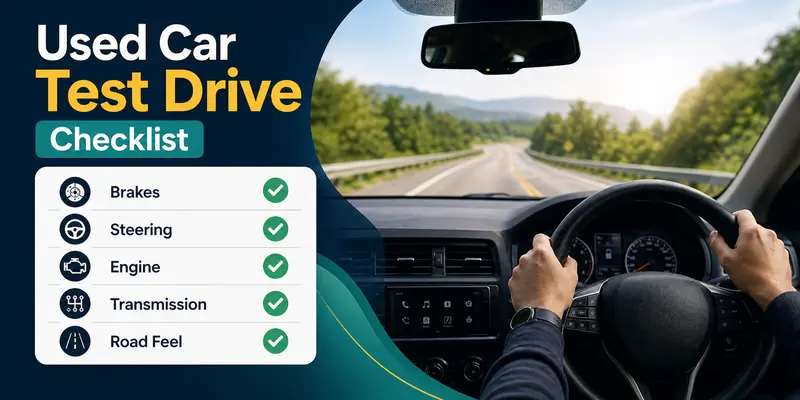
During the test drive, check:
- Does the car start easily?
- Does the engine sound normal?
- Does the steering feel straight?
- Does the car pull to one side?
- Do the brakes feel firm?
- Does the transmission shift smoothly?
- Is there vibration at higher speed?
- Are there warning lights?
- Does the suspension make noise?
- Does the air conditioning work while driving?
Do not let the seller rush the test drive. A good seller will allow a proper test.
Check the Brakes
Bad brakes are a safety issue.
During the test drive, notice:
- Grinding noise
- Squeaking
- Soft brake pedal
- Vibration while braking
- Car pulling to one side
- Slow stopping response
Brake pads may be simple to replace, but rotors, calipers, or brake lines can cost more.
Use brake issues during negotiation.
Check the Transmission
Transmission repairs can be very expensive.
Watch for:
- Delayed shifting
- Jerking
- Slipping
- Grinding
- Hard gear changes
- Burning smell
- Fluid leaks
For automatic cars, shifts should feel smooth. For manual cars, the clutch should not slip or feel too high.
If the transmission feels wrong, get a mechanic’s opinion before buying.
Check Suspension and Steering
Suspension problems affect comfort, safety, and tire wear.
Look for:
- Car bouncing too much
- Clunking sounds
- Steering vibration
- Pulling left or right
- Uneven tire wear
- Loose steering feel
Suspension repairs can add up fast. If the car feels unstable, be careful.
Review Service Records
Service records are very important. They show how the car was cared for.
Ask for records of:
- Oil changes
- Brake service
- Tire replacement
- Battery replacement
- Transmission service
- Timing belt or chain work
- Major repairs
- Recall repairs
A car with regular maintenance is often a safer choice than a car with no records.
High mileage is not always bad if the car has strong service history.
Vehicle Pre Purchase Inspection Checklist
A vehicle pre purchase inspection checklist is a deeper check done by a mechanic.
A mechanic can inspect:
- Engine
- Transmission
- Brakes
- Suspension
- Steering
- Computer codes
- Frame damage
- Rust under the car
- Leaks
- Tire condition
- Safety systems
This inspection may cost money, but it can save you much more later.
If the seller refuses a mechanic inspection, walk away.
Checklist for Buying a Used Car From Private Seller
Buying from a private seller can save money, but you need to be extra careful.
Use this checklist:
- Meet in a safe public place
- Ask for the seller’s ID
- Make sure the seller’s name matches the title
- Check that the title is not fake or altered
- Confirm there is no lien
- Do not pay before paperwork is complete
- Avoid cash-only pressure
- Get a signed bill of sale
- Take photos of documents
- Make sure you receive all keys
- Check local registration rules
Private seller deals usually have fewer protections than dealership purchases. So, take your time.
Buying From a Dealership Checklist
When buying from a dealership, check:
- Dealer reviews
- Final price
- Dealer fees
- Warranty terms
- Return policy
- Certified pre-owned details
- Vehicle history report
- Inspection report
- Financing terms
- Add-on charges
Ask the dealer to explain every fee. Do not sign until you understand the full price.
Popular Mechanics Used Car Checklist: What Buyers Usually Expect
Many buyers search for a Popular Mechanics used car checklist because they want a practical, expert-style guide.
A strong checklist should include:
- Visual inspection
- Mechanical inspection
- Test drive checks
- Title review
- VIN check
- Fluid check
- Tire check
- Brake check
- Repair estimate
- Final paperwork review
You do not need to be a mechanic to follow these steps. You only need patience, daylight, and a clear checklist.
Common Repair Cost Clues Buyers Miss
Some problems cost more than others.
Be extra careful with:
- Transmission slipping
- Engine knocking
- Heavy smoke
- Frame rust
- Flood damage
- Electrical problems
- Overheating
- Airbag warning lights
- Bad title history
Smaller issues may be okay if the price is fair. These include:
- Worn tires
- Weak battery
- Minor scratches
- Old wipers
- Small dents
- Basic brake pad wear
The key is to know the difference between small repairs and major risks.
Walk Away From These Red Flags
Do not buy the car if you notice serious warning signs.
Walk away if:
- VIN does not match
- Seller refuses inspection
- Title is missing
- Car has strong flood signs
- Engine knocks
- Transmission slips badly
- Warning lights stay on
- Seller rushes you
- Price is too good to be true
- Odometer records do not match
- Seller avoids basic questions
A bad car can cost more than a better car with a higher price.
How to Negotiate After Inspection
Use facts, not emotions.
For example:
- “The tires are worn, so I need to reduce my offer.”
- “The mechanic found an oil leak, so I need to include repair cost.”
- “The brakes need work, so the price should reflect that.”
Get repair estimates if possible. A written mechanic report gives you stronger negotiation power.
If the seller will not negotiate on serious problems, it is okay to walk away.
Printable Used Car Inspection Checklist
Use this printable used car inspection checklist when you visit the car.
Documents
- VIN matches
- Title checked
- Seller name matches title
- Vehicle history report checked
- Service records reviewed
- Recall status checked
- Bill of sale ready
Exterior
- Paint checked
- Rust checked
- Body gaps checked
- Glass checked
- Lights checked
- Tires checked
- Wheels checked
Interior
- Seats checked
- Carpet checked
- Smell checked
- Dashboard checked
- Electronics tested
- Air conditioning tested
- Trunk checked
Engine
- Oil checked
- Coolant checked
- Battery checked
- Belts checked
- Hoses checked
- Leaks checked
- Smoke checked
Test Drive
- Engine start checked
- Brakes checked
- Steering checked
- Transmission checked
- Suspension checked
- Noise checked
- Warning lights checked
Final Decision
- Mechanic inspection done
- Repair costs reviewed
- Final price agreed
- Paperwork complete
- Insurance ready
- Keys received
This can work as a free used car checklist for private sellers, dealerships, and online car listings.
What to Do After Buying a Used Car
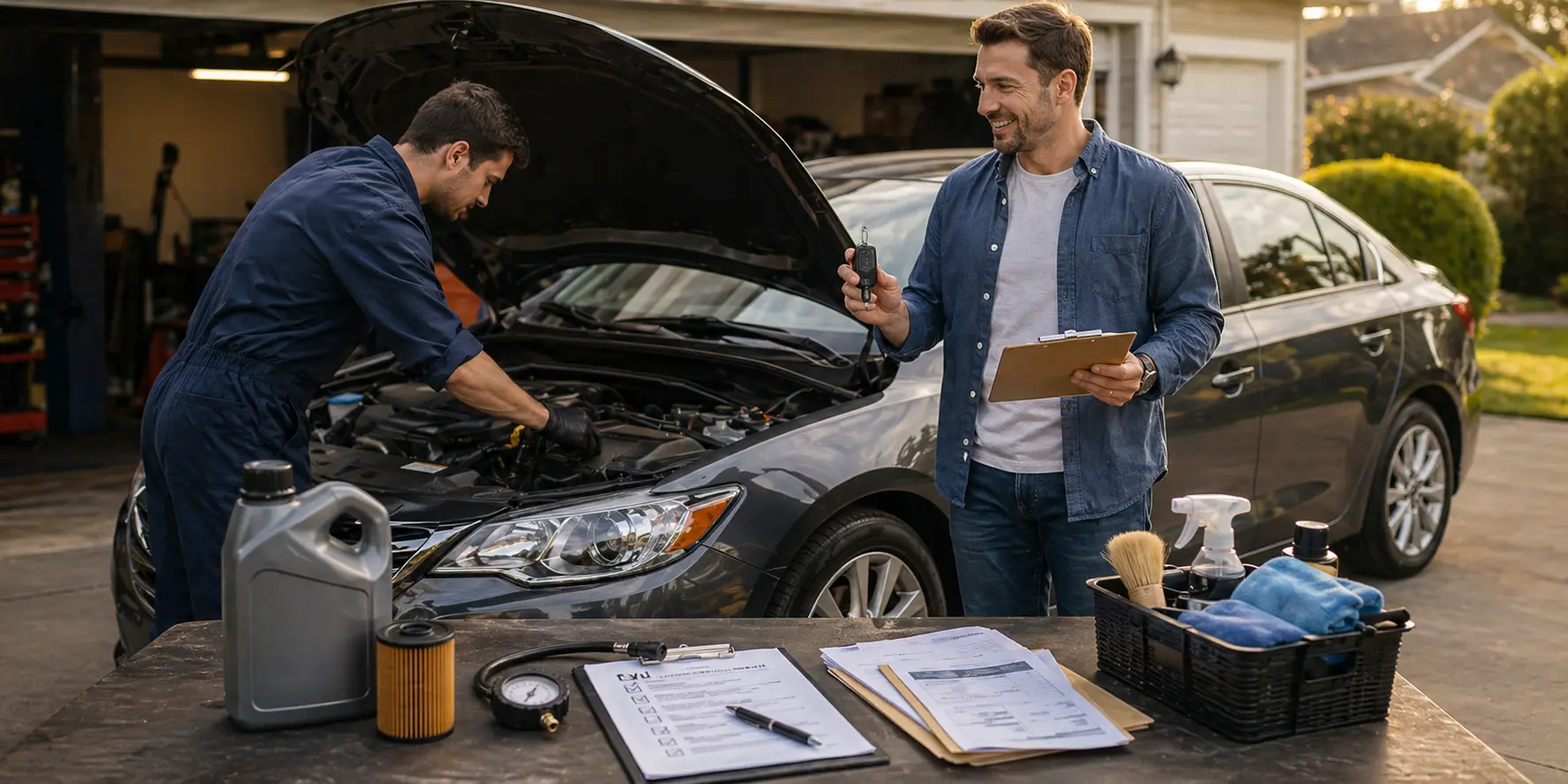
After buying the car, do not ignore basic maintenance.
Do these things soon:
- Change the oil if records are unclear
- Check tires
- Inspect brakes
- Replace old wipers
- Check battery
- Check all fluids
- Register the car
- Get insurance
- Keep all documents safe
Even a good used car needs care after purchase.
FAQs
The most important things are the VIN, title, vehicle history report, engine condition, transmission, and signs of flood or accident damage.
A free checklist is a great starting point. But it should not replace a professional mechanic inspection, especially for expensive cars.
Yes. A pre-purchase inspection can reveal hidden problems with the engine, transmission, brakes, suspension, and frame.
Check the seller’s ID, title, VIN, lien status, service records, bill of sale, and vehicle condition. Also get a mechanic inspection before payment.
Yes, but it is riskier. If service records are missing, get a mechanic inspection and use that risk during negotiation.
A seller who refuses a mechanic inspection is one of the biggest red flags. It may mean they are hiding a serious issue.
Not always. A high-mileage car with strong maintenance records can be better than a low-mileage car with poor care.
Look for musty smell, water stains, rust under seats, mud in hidden areas, foggy lights, and electrical problems.
Final Thoughts
A used car can be a great purchase when you inspect it the right way. Do not depend only on photos, seller promises, or a quick test drive.
Use this Used Car Inspection Checklist Before Buying to check the vehicle history, title, exterior, tires, interior, engine, fluids, test drive, paperwork, and red flags.
The goal is simple: buy a safe car, avoid hidden repair costs, and feel confident before you pay.
MORE USEFUL LINKS THAT YOU WILL LIKE:
Golf Buggy Tyre Pressure – The Best PSI for a Safer, Smoother Ride
Car Oil Leak Repair Cost: What You’ll Really Pay
Honda Civic vs Toyota Corolla – Which One Is Better for You?


- Be Respectful
- Stay Relevant
- Stay Positive
- True Feedback
- Encourage Discussion
- Avoid Spamming
- No Fake News
- Don't Copy-Paste
- No Personal Attacks
- Be Respectful
- Stay Relevant
- Stay Positive
- True Feedback
- Encourage Discussion
- Avoid Spamming
- No Fake News
- Don't Copy-Paste
- No Personal Attacks
