Best Mileage for a Used Car – A Smart Buyer’s Guide
Published: 02 Apr.2026
Buying a used car can save you a lot of money, but one question always comes up first: what is the best mileage for a used car?
Many buyers focus on the odometer and assume lower miles always mean a better vehicle. That sounds logical, but it is not always true. A well-maintained car with 110,000 miles can be a better buy than a neglected car with 45,000 miles. Mileage matters, but it is only one piece of the puzzle, which is why it is often discussed in essential buying tips for used car shoppers.
In this guide, you will learn the best mileage for a used car, what counts as high mileage, how to judge mileage by age, and what other factors matter before you buy.
What Is the Best Mileage for a Used Car?
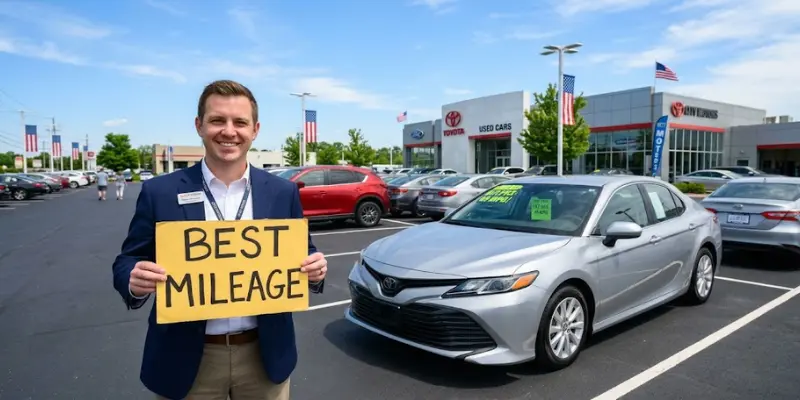
The best mileage for a used car usually depends on its age, maintenance history, and how it was driven.
As a general rule:
- 12,000 to 15,000 miles per year is considered normal
- A used car with mileage close to that average is usually a reasonable choice
- A car with much lower or much higher mileage needs a closer inspection
For many buyers, the sweet spot is often:
- 3 to 5 years old
- 30,000 to 70,000 miles
- Clean service records
- No major accident or flood history
This range often gives you a good balance of price, reliability, and remaining life.
Average Mileage by Vehicle Age
A better way to judge used car mileage is to compare it with the car’s age.
Quick Mileage-by-Age Guide
| Vehicle Age | Average Mileage Range |
| 1 year | 12,000–15,000 miles |
| 2 years | 24,000–30,000 miles |
| 3 years | 36,000–45,000 miles |
| 4 years | 48,000–60,000 miles |
| 5 years | 60,000–75,000 miles |
| 6 years | 72,000–90,000 miles |
| 8 years | 96,000–120,000 miles |
| 10 years | 120,000–150,000 miles |
A car near these ranges is usually considered normal. If the mileage is far above or below this average, dig deeper before making a decision.
Is Lower Mileage Always Better?
No. This is one of the biggest mistakes buyers make.
A low-mileage used car can look attractive, but it can still have problems if it sat unused for long periods. Cars need regular use to stay healthy. When a vehicle sits too long, issues can develop such as:
- Dry or cracked rubber seals
- Battery problems
- Old fluids
- Tire flat spots
- Rust from storage conditions
- Gasket deterioration
For example, a 10-year-old car with only 22,000 miles may seem like a great deal. But if it spent years parked outside or unused in a garage, it could need more repair work than a regularly driven car with 80,000 miles.
That is why the best mileage for a used car is not simply the lowest number on the odometer.
What Is Considered High Mileage for a Used Car?
A used car is often considered high mileage once it passes 100,000 miles, but that does not automatically make it a bad buy.
Today’s vehicles are built better than older models. Many modern cars, trucks, and SUVs can last:
- 150,000 miles
- 200,000 miles
- Or even more with proper maintenance
A high-mileage used car can still be a smart purchase if:
- It has a strong maintenance history
- It was driven mostly on highways
- It passed a pre-purchase inspection
- It has no major transmission or engine issues
- The price reflects the mileage fairly
High mileage becomes a bigger concern when the car also has poor maintenance, accident damage, rust, or signs of neglect.
Best Mileage for a Used Car by Buyer Type
The right mileage also depends on your budget and goals.
If you want the safest long-term choice
Look for:
- 30,000 to 60,000 miles
- Good maintenance records
- Newer model years
- Clean title and inspection report
If you want the best value
Look for:
- 60,000 to 90,000 miles
- Reliable brand and model
- Strong service history
- Reasonable price compared with market value
If you are shopping on a tight budget
Look for:
- 90,000 to 130,000 miles
- Proven reliability
- Highway-driven history if possible
- Recent major maintenance already completed
A higher-mileage car can still be worth buying if it has been cared for properly.
Mileage vs. Age: Which Matters More?
Mileage and age both matter. One should never be judged alone.
Mileage tells you:
- How much the car has been driven
- How much wear the engine, brakes, tires, and suspension may have
Age tells you:
- How old the rubber, seals, electronics, and fluids are
- How outdated the safety and technology features might be
A newer car with higher mileage can often be a better choice than an older car with low mileage.
Example:
- A 4-year-old car with 75,000 highway miles may be a better buy than
- A 10-year-old car with 40,000 miles and poor upkeep
The newer car may have received regular service and still have better overall condition.
Highway Miles vs. City Miles: Why It Matters
Not all miles are equal.
Highway miles are usually easier on a car because:
- The engine stays at a steady speed
- There is less stop-and-go wear
- Brakes, transmission, and suspension face less stress
City miles are harder on a car because:
- Frequent braking increases wear
- Stop-and-go traffic strains the transmission
- Short trips can be harder on the engine
- Potholes and traffic conditions increase suspension wear
That means a car with 100,000 highway miles may actually be in better condition than a car with 65,000 miles of hard city driving.
Ask the seller how the car was used. It can tell you a lot.
MORE USEFUL LINKS THAT YOU WILL LIKE:
Dual Turbo vs Twin Turbo – What’s the Real Difference?
Car Buying Guide Texas: How to Buy Smart and Avoid Costly Mistakes
Wheel Alignment With New Tyres – Do You Need It?
The Real Secret – Maintenance History Matters More Than Mileage
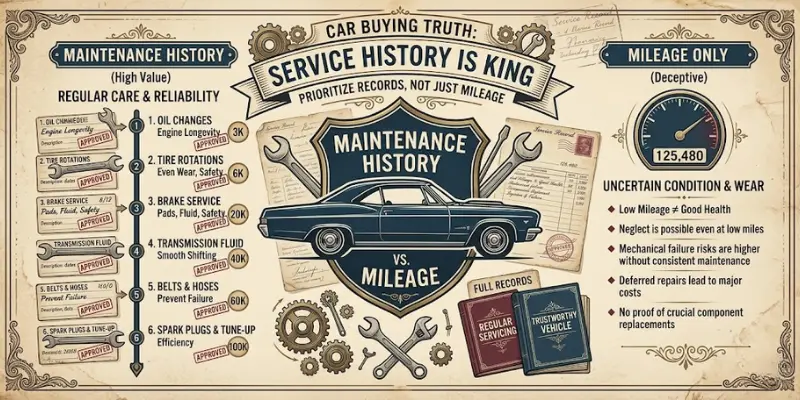
If you remember one thing from this article, remember this:
Service records matter more than mileage alone.
A used car with solid maintenance records is often the better buy.
Look for proof of:
- Regular oil changes
- Brake service
- Tire rotation and replacement
- Transmission service
- Coolant flushes
- Timing belt or chain service when required
- Battery replacement
- Scheduled maintenance from the manufacturer
If the seller cannot provide records, do not panic, but be more careful. Missing records are not always a deal-breaker, but they do increase risk.
Red Flags to Avoid No Matter the Mileage
Some problems matter more than the odometer number.
Walk away or proceed very carefully if you notice:
- Inconsistent odometer readings
- Salvage or rebuilt title
- Flood damage
- Major rust underneath the vehicle
- Engine knocking or heavy smoke
- Transmission slipping
- Warning lights that stay on
- Uneven tire wear
- Strong mold or mildew smell
- Poor service history
- Signs of accident repairs done badly
A low-mileage car with these problems is still a bad buy.
Best Mileage for a Used Car – A Simple Buying Formula
Here is an easy way to judge a used car:
A good used car usually has:
Age-appropriate mileage + clean maintenance history + no major damage + a good inspection + fair price
That formula is more useful than mileage alone.
When a High-Mileage Used Car Can Be a Great Buy
Some buyers avoid any car over 100,000 miles. That can be a mistake.
A high-mileage car may be worth buying if:
- It comes from a reliable brand
- It has mostly highway miles
- It has one or two careful owners
- It has a clean vehicle history report
- Major maintenance was already completed
- It drives smoothly and passes inspection
This is especially true for many trucks, SUVs, and well-maintained commuter cars.
You may pay less upfront and still get years of reliable service.
When a Low-Mileage Used Car Can Be a Bad Buy
A low odometer reading does not guarantee quality.
Be cautious if the car:
- Sat unused for long periods
- Has old tires despite low miles
- Has stale fluids
- Shows rust or corrosion
- Has brittle hoses or seals
- Has no service history
- Was driven only on short trips
A car that was rarely driven may look nice on paper but still bring expensive repairs.
How to Check if the Mileage Is Worth It
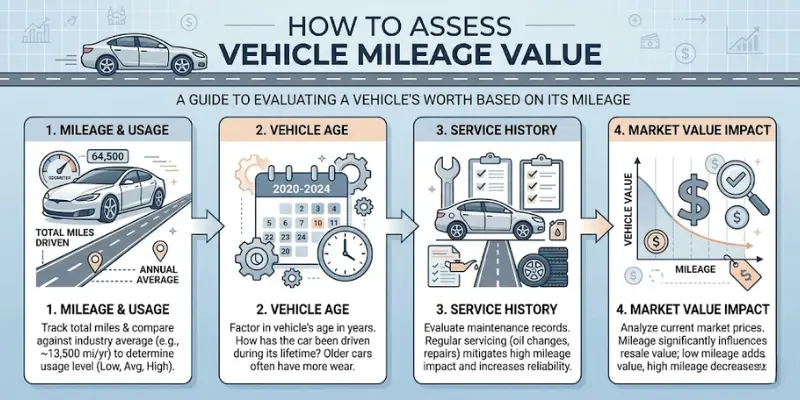
Before you buy, take these steps.
1. Compare mileage to age
Use the 12,000 to 15,000 miles-per-year rule as a starting point.
2. Get a vehicle history report
Check for:
- Title problems
- Accident history
- Odometer issues
- Number of owners
- Service records
3. Review maintenance records
A documented maintenance history adds major value.
4. Get a pre-purchase inspection
Pay a trusted mechanic to inspect the car before you commit.
5. Test drive the car properly
Drive it at low speed, highway speed, and during braking.
6. Check for upcoming repair costs
Ask whether the car may soon need:
- Tires
- Brakes
- Battery
- Suspension work
- Timing belt service
- Transmission service
Best Mileage for a Used Car by Budget
Mileage should also match the price.
Under budget pressure
A car with 90,000 to 120,000 miles may offer more value if it has been maintained well.
Mid-range buyers
Cars with 50,000 to 80,000 miles often hit the sweet spot between cost and remaining life.
Premium used-car buyers
Cars with 20,000 to 50,000 miles may offer more peace of mind, but they usually cost more.
Do not just ask, “How many miles does it have?”
Also ask:
- “How was it maintained?”
- “What repairs are coming soon?”
- “Is the price fair for the mileage?”
- “How long do I plan to keep it?”
How Mileage Affects Price Negotiation
This is something many competitor articles miss.
Mileage should not only help you choose a car. It should also help you negotiate.
Use mileage to ask for a better price if:
- The car is above average for its age
- Tires or brakes are worn
- The car is near a major service interval
- Records are incomplete
- The vehicle has cosmetic wear that matches heavy use
Use condition to justify a fair deal even with higher mileage if:
- The car drives well
- It has service records
- Recent major work has been done
- The inspection comes back clean
A smart buyer negotiates based on the whole condition, not just the odometer.
Certified Pre-Owned vs. Regular Used Cars
If you want extra peace of mind, a certified pre-owned (CPO) vehicle can be a strong choice.
CPO benefits often include:
- Manufacturer-backed inspection
- Limited warranty
- Roadside assistance
- Better reconditioning standards
But CPO cars cost more. If you are comfortable getting an independent inspection, a regular used car may give you better value.
Quick Checklist – What Is the Best Mileage for a Used Car?
Before buying, ask yourself:
- Is the mileage normal for the car’s age?
- Does the vehicle have a clean history report?
- Are service records available?
- Was it mostly highway or city driven?
- Has it passed an independent inspection?
- Are there signs of rust, leaks, or neglect?
- Is the asking price fair for the mileage and condition?
If the answer is yes to most of these, the car may be a smart buy.
FAQs
Not always. A well-maintained vehicle can still be reliable well past 100,000 miles.
Around 60,000 to 75,000 miles is generally normal. Less can be good, but only if the car was maintained properly.
You can, but only if it has a strong service history, a good inspection report, and a fair price.
Neither is more important on its own. The best buying decision comes from looking at age, mileage, condition, and maintenance together.
Usually, yes. Highway miles are typically easier on the engine, brakes, and transmission.
Final Thoughts
The best mileage for a used car is not one magic number. In most cases, the best choice is a car with:
- Mileage that matches its age
- A clean maintenance history
- No major red flags
- Good inspection results
- A fair price
For many buyers, the sweet spot is 30,000 to 70,000 miles on a car that is 3 to 5 years old. But that is not the only smart option. A well-cared-for higher-mileage car can still be an excellent buy, while a neglected low-mileage vehicle can turn into a money pit.
When shopping for a used car, do not chase the lowest mileage blindly. Focus on the full story behind the vehicle. That is how smart buyers find the best value.
MORE USEFUL LINKS THAT YOU WILL LIKE:
Car Dent Repair Cost: What You’ll Really Pay in 2026
Golf Buggy Tyre Pressure – The Best PSI for a Safer, Smoother Ride
Used Car Inspection Checklist Before Buying – What to Check Before You Say Yes





- Be Respectful
- Stay Relevant
- Stay Positive
- True Feedback
- Encourage Discussion
- Avoid Spamming
- No Fake News
- Don't Copy-Paste
- No Personal Attacks
- Be Respectful
- Stay Relevant
- Stay Positive
- True Feedback
- Encourage Discussion
- Avoid Spamming
- No Fake News
- Don't Copy-Paste
- No Personal Attacks
